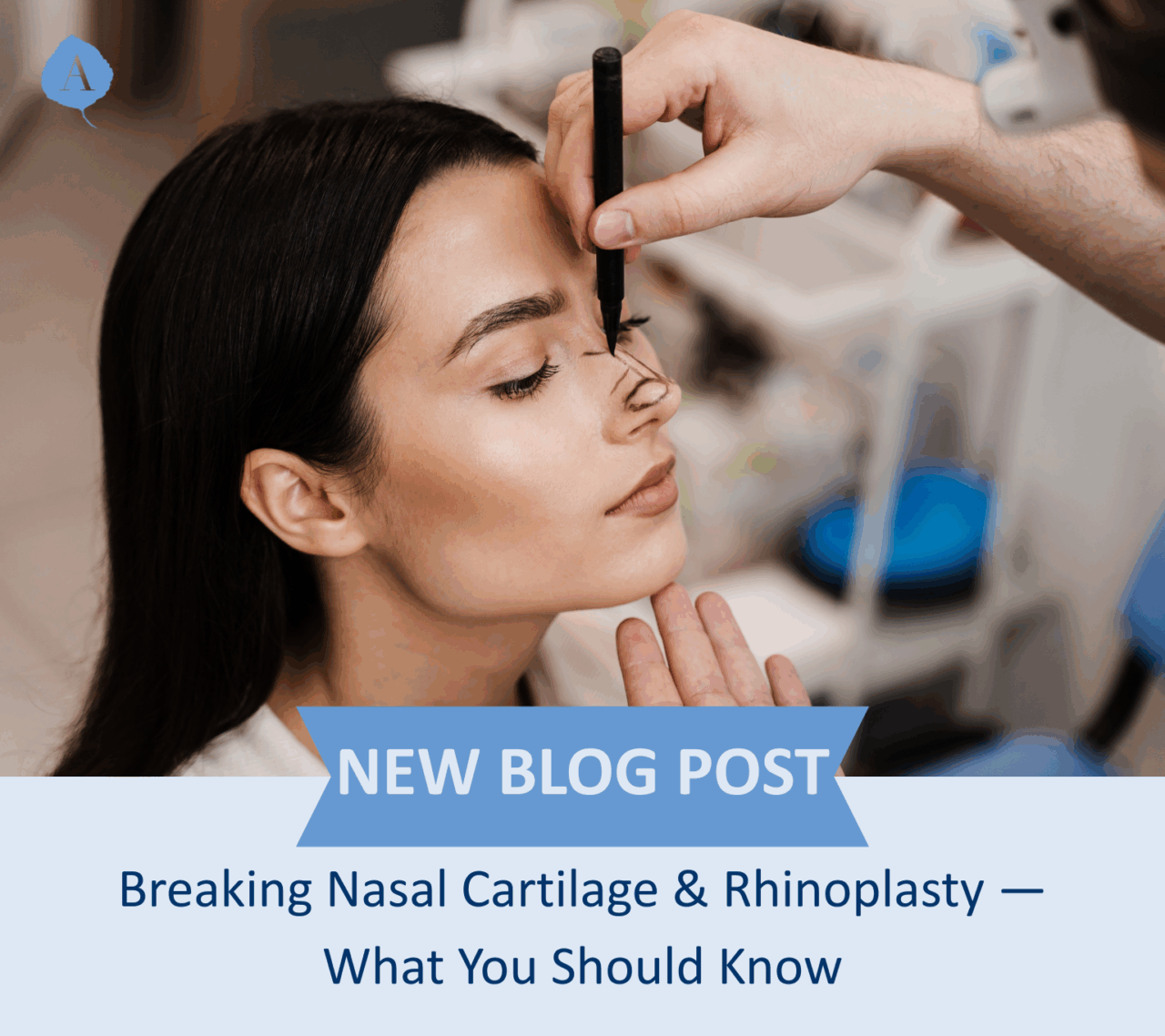
If you’ve ever heard someone say a nose was “broken” or “reshaped,” they might be referring to structural changes inside the nose — often involving cartilage and bone. At Aspen Facial Plastic Surgery, we work to restore both function and appearance when nasal structure has been compromised, or when patients simply want a reshaping that respects their anatomy.
What Does “Breaking Cartilage in Nose” Mean — And Is Rhinoplasty the Answer?
Your nose is supported internally by bone (upper portion) and cartilage (lower portion, including the tip and septum).
A nasal “break” often refers to re-setting or reshaping the bone and cartilage — for example after trauma, injury, or because of structural abnormalities (crooked nose, misaligned cartilage, breathing issues, previous surgery issues).
When someone receives a cosmetic or functional rhinoplasty, the surgery can reshape both bone and cartilage, modifying how the nose looks and how it works.
That means if cartilage or bone has been displaced (due to trauma) or is structurally unsatisfactory (crooked bridge, asymmetry, breathing obstruction), suitable rhinoplasty — done by an experienced facial plastic surgeon — can correct those issues in a stable, long-term way.
Types of Rhinoplasty Procedures: What’s Available at Aspen Facial Plastic Surgery
Not all rhinoplasty is the same. Your anatomy, goals, and needs will determine which type is right. Common types include:
- Open Rhinoplasty — Involves a small external incision (typically at the base of the nose, between the nostrils) so the surgeon can lift the skin and directly view and adjust the internal nasal structure (bone, cartilage, septum). This approach is often used when more extensive reshaping or cartilage grafting is needed (for crooked noses, structural deformities, large changes).
- Closed (Endonasal) Rhinoplasty — All incisions are inside the nostrils; no external incision. Surgeons reshape bone and cartilage through these internal incisions. Because the skin is not lifted off the underlying structure, recovery can be faster and swelling less noticeable — but the technique may limit how much reshaping is possible.
- Revision Rhinoplasty — Sometimes people have had a prior nose surgery but need corrections (due to structural issues, healing, or cosmetic dissatisfaction). Revision rhinoplasty can be more complex because of scar tissue or altered anatomy, but it’s often possible.
- Functional + Aesthetic Rhinoplasty — For those whose concerns involve both breathing and appearance (e.g. distorted cartilage, deviated septum from injury, difficulty breathing plus cosmetic issues), rhinoplasty can address both.
When done correctly, rhinoplasty reshapes the internal structure so the skin “drapes” naturally over the new framework — giving you a nose that looks natural, functions better, and matches your facial proportions.
Is Rhinoplasty Common for People in Their 30s and Older?
Many think rhinoplasty is mostly for teenagers or young adults — but that’s no longer the full picture. While younger adults remain a large portion of rhinoplasty patients, data shows that substantial numbers of people in their 30s and older undergo nose reshaping too.
- According to a rhinoplasty “by age” breakdown, about 24% of rhinoplasty patients are in their 30–39 age group.
- In a study of primary rhinoplasty, the median age was ~ 37.9 years old (range 18–78) — showing that many first-time nose jobs occur in the 30s.
- There is effectively no strict upper age limit for rhinoplasty — as long as the patient is healthy, healing capacity is good, and expectations are realistic.
This means if you’re in your 30s, 40s, 50s — or beyond — and seeking improved breathing, structural correction, or cosmetic refinement of the nose, you are often a very viable candidate for rhinoplasty.
Why Choose Aspen Facial Plastic Surgery for Rhinoplasty
When you choose Aspen Facial Plastic Surgery and Dr. Amir Allak, you’re choosing a provider likely experienced in structural rhinoplasty, who understands:
- How to assess internal nasal structure and cartilage/bone anatomy
- The full range of rhinoplasty techniques (open, closed, functional, aesthetic, revision)
- How to customize the surgical plan for each patient’s anatomy and goals
- The balance between reshaping and preserving natural facial harmony and nasal function
Whether you need a minor cosmetic refinement or a more complex functional reconstruction (e.g. after cartilage damage or nasal trauma), a careful evaluation at Aspen Facial Plastic Surgery can help you determine the right approach.