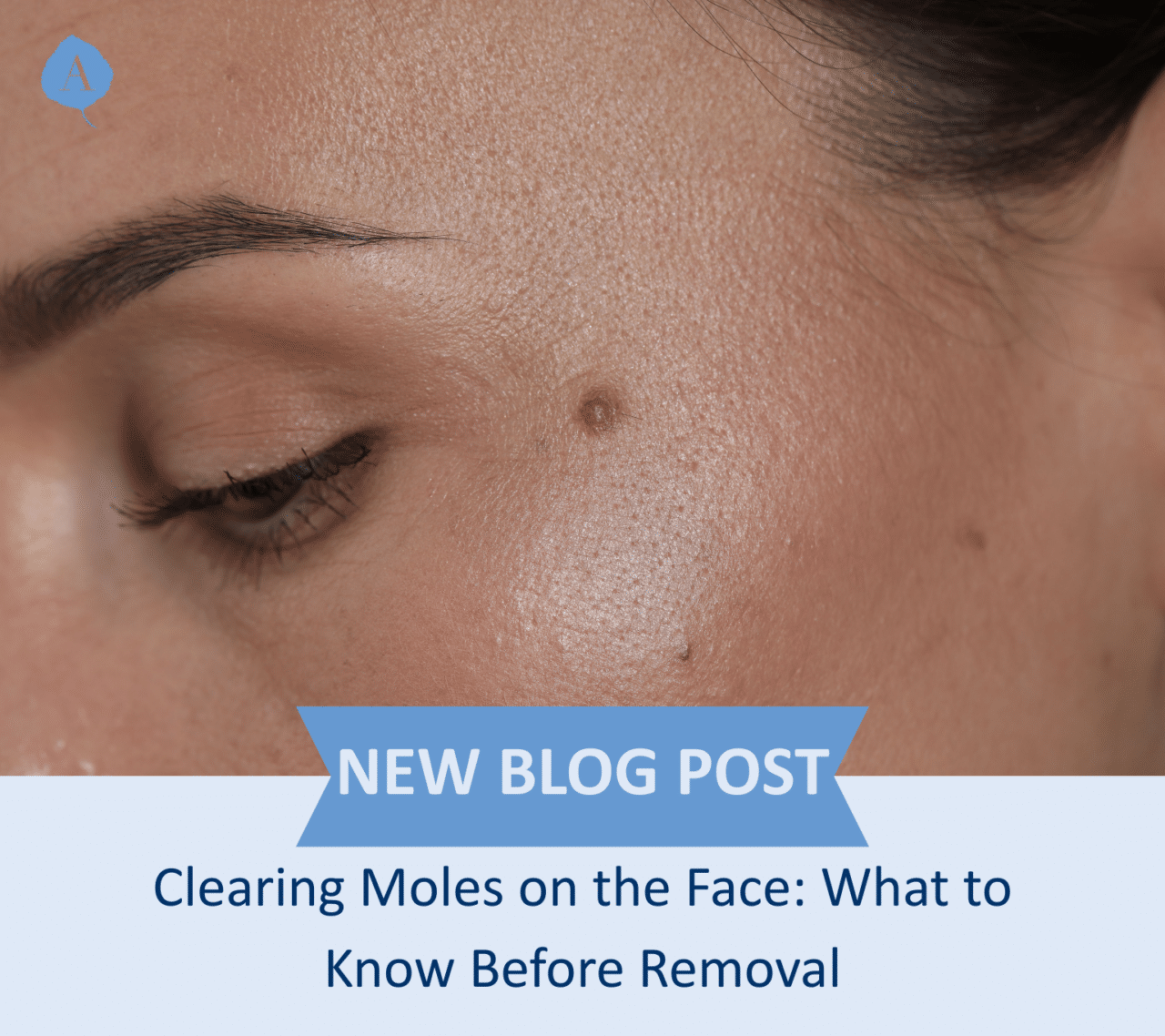
Facial moles are incredibly common—but when they’re prominent, raised, or changing, many patients begin to wonder whether it’s time to have them removed. At Aspen Facial Plastic Surgery, patients often ask the same questions: How does mole removal work? Will it leave a scar? And when should I remove a mole on my face?
When performed by a board-certified plastic surgeon in Utah, facial mole removal can be both safe and aesthetically precise, helping you achieve natural-looking results with minimal scarring.
What Are Facial Moles—and Are They Safe?
Moles (also called nevi) are clusters of pigmented skin cells that can appear flat, raised, smooth, or textured. Most facial moles are benign and harmless, but some may require medical evaluation.
You should consider having a mole evaluated if it:
- Changes in size, shape, or color
- Becomes itchy, painful, or bleeds
- Appears suddenly in adulthood
- Is raised or located in a high-friction area
- Causes cosmetic concern or self-consciousness
At Aspen Facial Plastic Surgery, each mole is carefully examined to determine whether removal is recommended for medical reasons, cosmetic reasons, or both.
When Should You Remove a Mole on Your Face?
Facial mole removal isn’t just about appearance—it’s about timing and technique. Many patients choose to remove moles when:
- The mole becomes more noticeable with age
- Makeup doesn’t conceal it well
- It interferes with shaving or skincare
- It draws unwanted attention in photos
- A dermatologist recommends removal
Early removal can sometimes result in smaller scars, especially when the mole is removed before it enlarges or thickens.
The Mole Removal Process: What to Expect
One of the most common concerns patients have is whether mole removal is complicated or painful. In most cases, it’s a straightforward outpatient procedure.
Here’s what the process typically looks like:
- Consultation & Evaluation
Your surgeon examines the mole and determines the safest and most aesthetically appropriate removal method. - Local Anesthesia
The area is numbed to ensure comfort throughout the procedure. - Precise Removal
Techniques may include excision or shaving, depending on the mole’s depth and location. Facial anatomy is carefully respected. - Pathology (if needed)
Removed tissue may be sent for testing to ensure it’s benign. - Recovery & Healing
Most patients return to normal activities the same day.
Choosing a board-certified plastic surgeon in Utah is essential—especially for facial procedures—because precision and scar placement matter.
Will Mole Removal Leave a Scar?
This is the number one question patients ask—and understandably so.
Any time the skin is cut, there is the potential for a scar. However, when mole removal is performed by a facial plastic surgery specialist, scarring is typically minimal and carefully managed.
At Aspen Facial Plastic Surgery, techniques are used to:
- Place incisions along natural skin lines
- Minimize tension on the skin
- Promote smooth, even healing
- Reduce redness and visibility over time
Most scars fade significantly within a few months and are often barely noticeable once fully healed.
Why Choose Aspen Facial Plastic Surgery?
The face requires a different level of expertise than other areas of the body. That’s why patients seeking to clear moles on the face benefit from choosing a practice that specializes exclusively in facial procedures.
At Aspen Facial Plastic Surgery, you’re treated by a board-certified plastic surgeon in Utah who understands facial anatomy, aesthetics, and long-term results. The goal isn’t just to remove a mole—it’s to preserve the natural beauty and balance of your face.
Ready to Clear Facial Moles with Confidence?
Whether your concern is medical, cosmetic, or both, facial mole removal should be handled with care and expertise. A personalized consultation at Aspen Facial Plastic Surgery can help determine the best approach for safe removal, minimal scarring, and natural results.
If you’ve been considering removing a facial mole, now is the perfect time to explore your options with a trusted facial plastic surgery specialist.