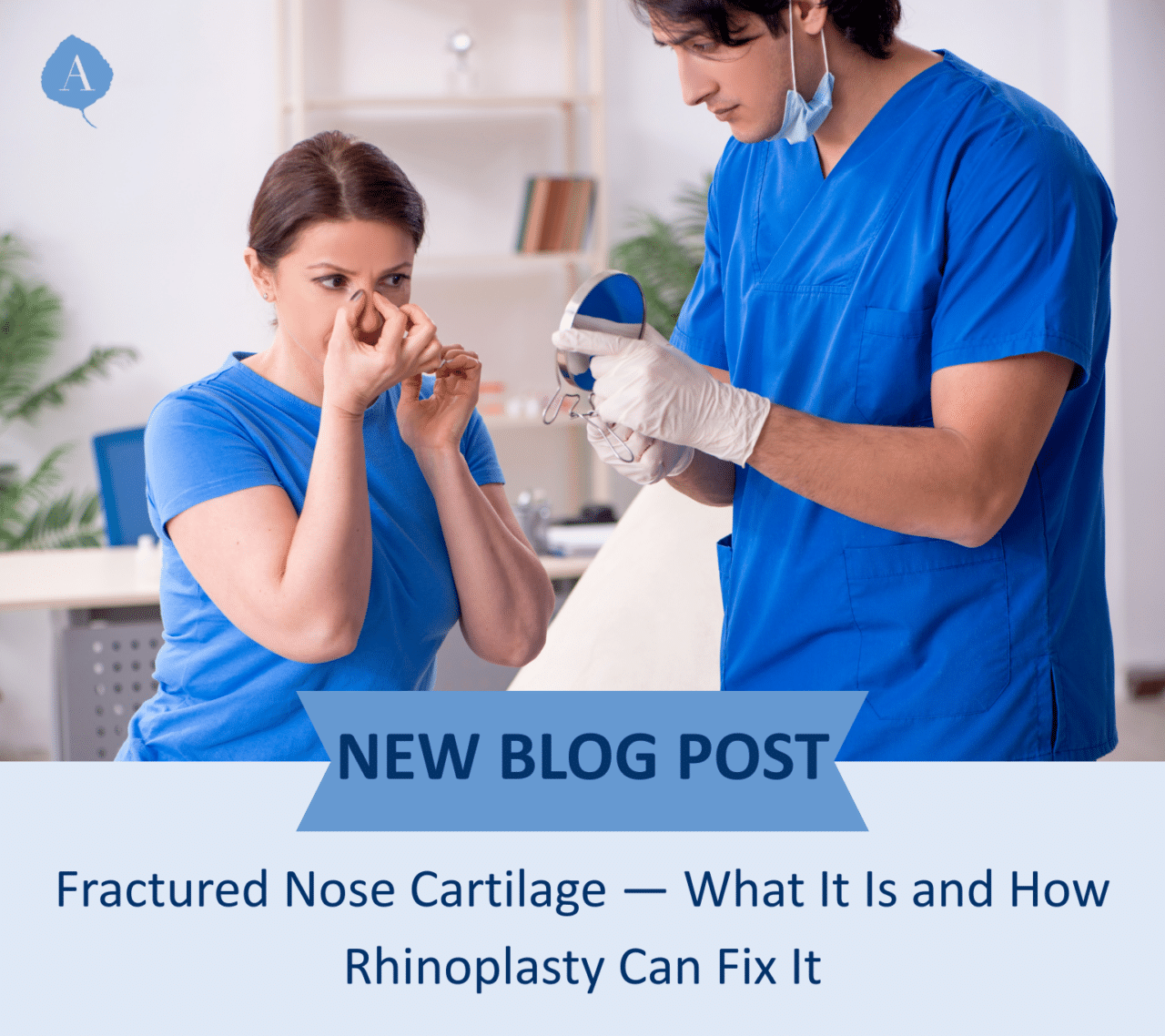
If you’ve ever been hit in the nose, suffered a bad fall, or dealt with long-term breathing issues, there’s a chance you may be living with a dislocated nose cartilage without even realizing it. Many patients assume their nasal issues are “just allergies” or “just congestion,” when in reality the underlying structure has shifted out of place.
At Aspen Facial Plastics, Dr. Amir Allak helps patients understand the difference between a normal structural deviation and true cartilage displacement—and why the right procedure can correct both your breathing and your appearance at the same time.
What Is Fractured Nose Cartilage?
Your nose is supported by several pieces of cartilage that give it shape and allow for proper airflow. When one of these cartilages becomes fractured, it shifts out of its normal position. This can affect the bridge, tip, or internal airway.
A dislocation can happen from:
- Sports injuries
- Car accidents
- Falls
- Childhood trauma that worsens over time
- Previous nasal surgery
- Repeated pressure or impact to the nose
Because cartilage doesn’t “reset” on its own, even a small displacement can cause long-term problems.
Signs You May Have a Fractured Cartilage
Many patients don’t realize what they’re experiencing is structural. Symptoms may include:
- One nostril always feeling more blocked
- Crooked appearance of the nose
- Pain or pressure after touching the nose
- Frequent sinus infections
- Difficulty breathing during sleep or exercise
- A collapsed or uneven nasal valve
These symptoms often overlap with a deviated septum, which is why professional evaluation is so important.
Dislocated Cartilage vs. Deviated Septum: What’s the Difference?
A deviated septum occurs when the thin wall separating the nostrils is off-center.
A dislocated nose cartilage involves one of the supporting nasal cartilages shifting out of place.
Patients often have both, which is why deviated septum rhinoplasty is commonly recommended. This type of procedure can address:
- Septal deviation
- Nose cartilage dislocation
- Airway collapse
- Cosmetic crookedness
- Nasal obstruction
How Rhinoplasty Corrects a Dislocated Cartilage
The most effective long-term solution for cartilage displacement is rhinoplasty and deviated septum correction, performed by an experienced facial plastic surgeon.
At Aspen Facial Plastics, Dr. Amir Allak uses a functional and structural approach to:
✔ Reposition the Cartilage
The displaced cartilage is gently lifted, aligned, and stabilized back into its normal anatomical position.
✔ Strengthen Weak Areas
If the support is damaged, Dr. Allak adds grafts to reinforce breathing and prevent collapse.
✔ Straighten the Septum
Since many patients have both issues, the septum is corrected at the same time to optimize airflow.
✔ Improve Cosmetic Alignment
If the nose appears crooked, twisted, or uneven, Dr. Allak refines the shape while preserving a natural look.
✔ Restore Proper Breathing
Patients notice immediate improvement in airflow and long-lasting structural stability.
Why Rhinoplasty Is the Best Fix
Unlike temporary treatments, rhinoplasty corrects the underlying structure. A dislocated cartilage will not return to place without surgical support.
Patients choose Dr. Allak because he prioritizes:
- Natural, balanced results
- Long-term breathing function
- Minimally traumatic technique
- Precision cartilage handling
- Comfortable healing process
If you’ve been dealing with breathing problems, a crooked nose, or symptoms that never seem to improve, you may be living with a structural issue—not just congestion.