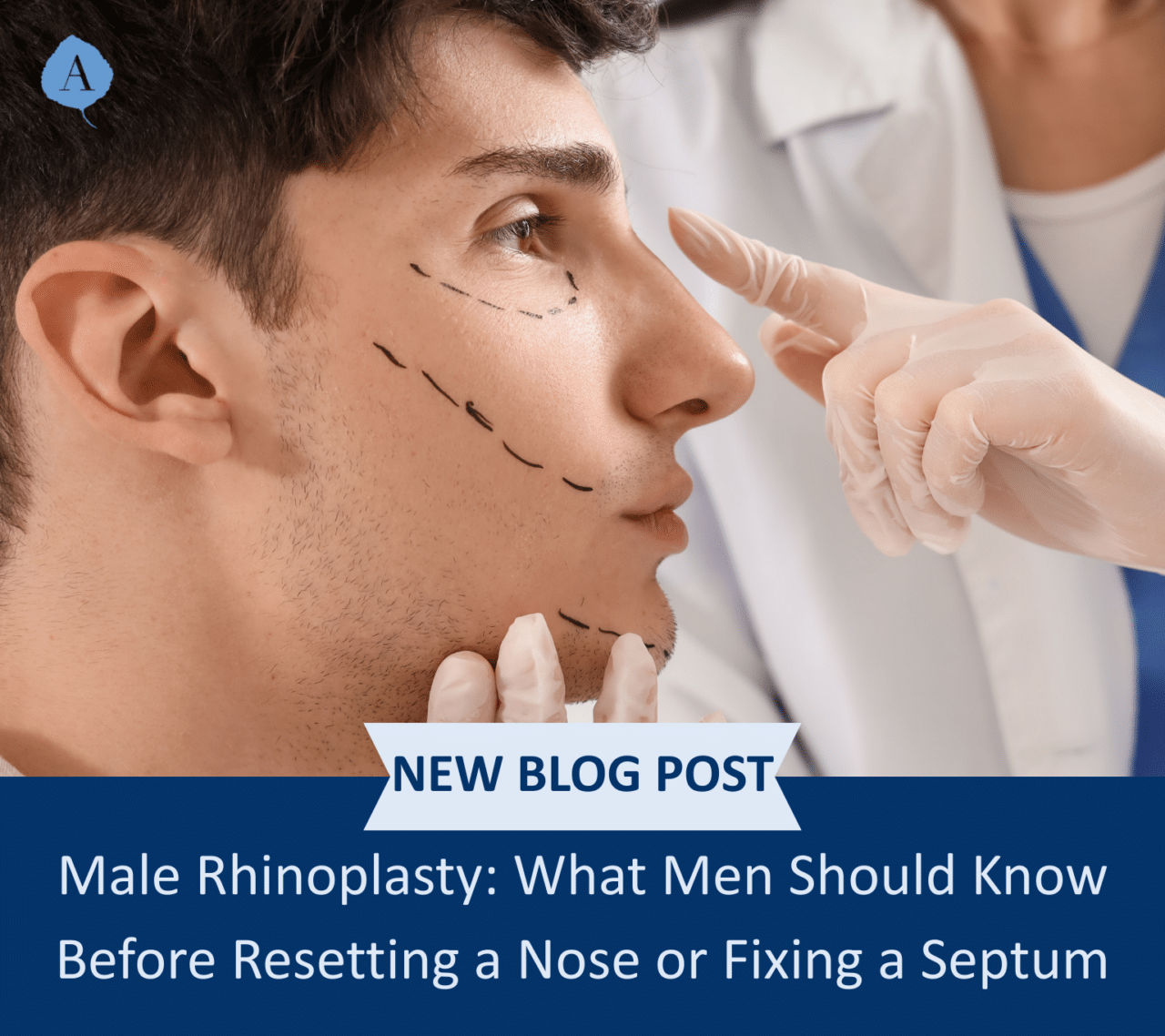
Rhinoplasty is no longer a procedure dominated by women. More men are choosing nasal surgery than ever before — not to look different, but to look stronger, more balanced, and to breathe better. At Aspen Facial Plastics, many male patients come in with similar concerns: Will I still look masculine? Will people know I had surgery? Can this fix my breathing? If you’re a man considering rhinoplasty, here’s what you should know.
Maintaining Masculinity: Will My Nose Still Look Strong?
For most men, this is the number one concern. They worry about over-rotation, where the nose turns up too much, losing a strong bridge, or ending up with a softer, more feminine appearance. Male rhinoplasty is approached differently than female rhinoplasty. Men typically want a straighter profile, a smoother hump, improved symmetry, and strong, natural structure. The goal is refinement — not feminization. A masculine nose often has a straighter dorsum and defined angles, and surgery should preserve and enhance those features rather than erase them.
Will It Look Obvious?
Many men want subtle improvement. They don’t want coworkers asking questions or friends noticing something “done.” A well-performed rhinoplasty should look natural and proportionate to your face. The best outcomes don’t draw attention to the nose itself — they simply improve overall balance. Most patients hear comments like, “You look great,” without anyone being able to pinpoint exactly why.
What Is Recovery Really Like?
Recovery is a practical concern, especially for active men. Most patients return to work within about a week, although they will wear a splint initially. Bruising and visible swelling improve significantly in the first few weeks, but final refinement takes time — particularly in men who tend to have thicker nasal skin. Exercise is resumed gradually, with most workouts restarting within a few weeks. While swelling can take months to fully settle, most men feel socially comfortable quickly.
Can Rhinoplasty Fix Breathing Problems?
For many men, surgery isn’t purely cosmetic. A rhinoplasty septum procedure can correct a deviated septum while also improving the external appearance of the nose. Structural issues inside the nose often contribute to chronic congestion or difficulty breathing.
If you’ve experienced trauma, resetting a nose that healed crooked or improperly aligned is very possible. Many men ask whether a broken nose put back in place years later is realistic — and in most cases, it is. Surgery can reposition nasal bones, repair cartilage damage, and restore airflow while straightening the appearance.
In some cases, inferior turbinate hypertrophy surgery is recommended to reduce enlarged turbinates that block airflow. When combined with septal correction, this can significantly improve breathing and long-term nasal function.
What If My Nose Was Broken Before?
Sports injuries and accidents are extremely common causes of nasal trauma in men. A crooked nose, collapse on one side, or difficulty breathing often results from improper healing after injury. Even if the break happened years ago, resetting a nose surgically can restore both symmetry and function. While prior trauma can make surgery more complex, experienced facial plastic surgeons routinely treat these cases successfully.
Will It Change My Entire Face?
The nose plays a central role in male facial structure. Many men worry that changing their nose will make their face look weaker or smaller. In reality, a balanced nose often enhances other strong features like the jawline and chin. The goal is facial harmony — ensuring the nose complements the rest of the face rather than overpowering or diminishing it.
How Painful Is It?
Most men are relieved to learn that rhinoplasty recovery is typically described as pressure and congestion rather than sharp pain. Discomfort is usually manageable and improves steadily during the first week.
Are There Non-Surgical Options?
Some men explore filler-based treatments to camouflage small bumps or irregularities. While these options can temporarily smooth minor concerns, they cannot make the nose smaller, fix structural breathing problems, correct a deviated septum, or truly reset a nose after trauma. If airflow issues or major structural concerns are present, surgery is the only long-term solution.
Am I Too Young or Too Old?
Surgery is generally performed once facial growth is complete. There is no strict upper age limit as long as you are healthy. Men in their 20s through 50s commonly pursue rhinoplasty — often combining cosmetic refinement with functional correction. Age matters less than overall health and clear goals.
The Bottom Line for Men Considering Rhinoplasty
Men considering rhinoplasty usually care about three things: maintaining masculinity, looking natural, and improving breathing. Whether the goal is correcting a rhinoplasty septum issue, performing inferior turbinate hypertrophy surgery, resetting a nose after injury, or addressing a broken nose put back in place, the focus should always be on strong structure, subtle refinement, and long-term function.
The right approach doesn’t change who you are — it restores balance, strength, and confidence.