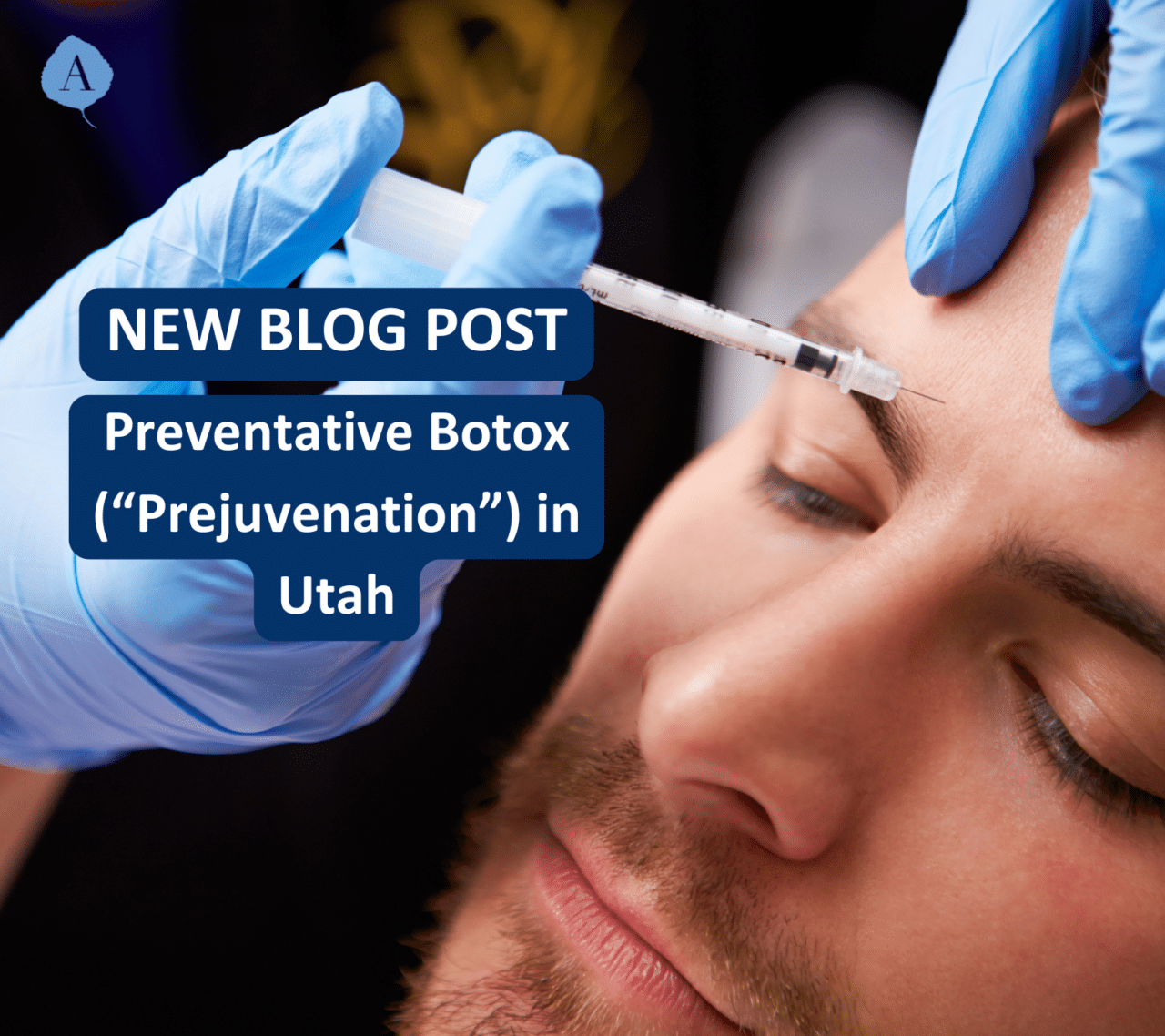
“Prejuvenation” is the idea of starting Botox in your 20s or early 30s to prevent wrinkles before they form and has become a major trend in Utah’s aesthetics scene. But does it actually work? And what do you need to know before your first appointment?
What is preventative Botox?
The concept is simple: by relaxing the facial muscles that cause dynamic wrinkles (frown lines, crow’s feet, forehead creases), you prevent those lines from etching themselves into your skin over time. The result? You may develop fewer deep wrinkles as you age.
When should you start?
There’s no single right age. Most Utah providers see patients starting in their late 20s to early 30s, but it depends on your individual facial anatomy and how early you notice expression lines forming.
A practical rule of thumb: if lines disappear when you relax your face, you probably don’t need Botox yet. If they remain even when your muscles are at rest, those are “Stage 1” wrinkles that will deepen over time and that’s when treatment makes sense.
Preparing for Botox
Getting ready for your appointment is simple, but a few steps make a real difference:
What to avoid before treatment:
- Blood thinners — Stop aspirin, ibuprofen, and naproxen 1–2 weeks before (unless prescribed by your doctor)
- Supplements — Pause fish oil, vitamin E, and ginkgo biloba at least one week ahead
- Alcohol — Skip it for 24–48 hours before your appointment to reduce bruising risk
- Excessive sun or tanning — Sunburned or irritated skin is more sensitive to injections
What to do:
- Arrive with a clean face: no makeup, no skincare products
- Disclose all medications and supplements to your provider
- Stay hydrated and well-rested
Can you wash your face after Botox?
Yes, but gently. Here’s the timeline:
- First 4–6 hours: Avoid touching or washing the injection sites at all. Let the micro-wounds close.
- After 4–6 hours: You can wash your face with lukewarm water and a mild cleanser. Use gentle, patting motions: no scrubbing or rubbing.
- First 24 hours: Be extra careful around the injection sites. Don’t rub, massage, or apply pressure.
- Makeup: Wait at least 4–6 hours before applying makeup over treated areas.
Most providers recommend waiting 24 hours before using active skincare ingredients (retinols, acids, vitamin C) on the treated areas.
How many units of Botox are in a vial?
Botox Cosmetic comes in two standard vial sizes:
- 50 units per vial
- 100 units per vial
There’s also a 200-unit vial available for therapeutic (non-cosmetic) uses. Each vial is single-dose only. Once reconstituted with sterile saline, it must be used within 24 hours. Your provider will use the appropriate amount for your treatment areas and discard any remainder.
Botox vs. Xeomin: what’s the difference?
Both are botulinum toxin type A injectables that smooth wrinkles, but they’re not identical.
| Botox (onabotulinumtoxinA) | Xeomin (incobotulinumtoxinA) | |
| Formulation | Contains complexing proteins | “Naked” toxin — no accessory proteins |
| Onset | 3–7 days | 4–7 days |
| Duration | 3–4 months | Up to 6 months (some studies) |
| Resistance risk | Slightly higher due to proteins | Lower — may be better for long-term use |
| Cost | Standard pricing | Often slightly more affordable |
| FDA approval | Broad, decades of data | Same cosmetic indications |
Which should you choose? For first-timers, Botox is the safer starting point, it has 24+ years of clinical data and providers know exactly how it behaves. Xeomin is a great option if you’re health-conscious about additives, if you’ve developed resistance to Botox, or if you want potentially longer-lasting results. Many Utah practices carry both and can help you decide.
Is prejuvenation worth it?
Utah patients who start Botox early report that they need fewer units over time and develop less prominent static wrinkles. But it’s not magic: genetics, sun exposure, and lifestyle matter just as much. The key is finding a qualified injector who will be honest about whether you actually need treatment yet, rather than selling you on a trend.