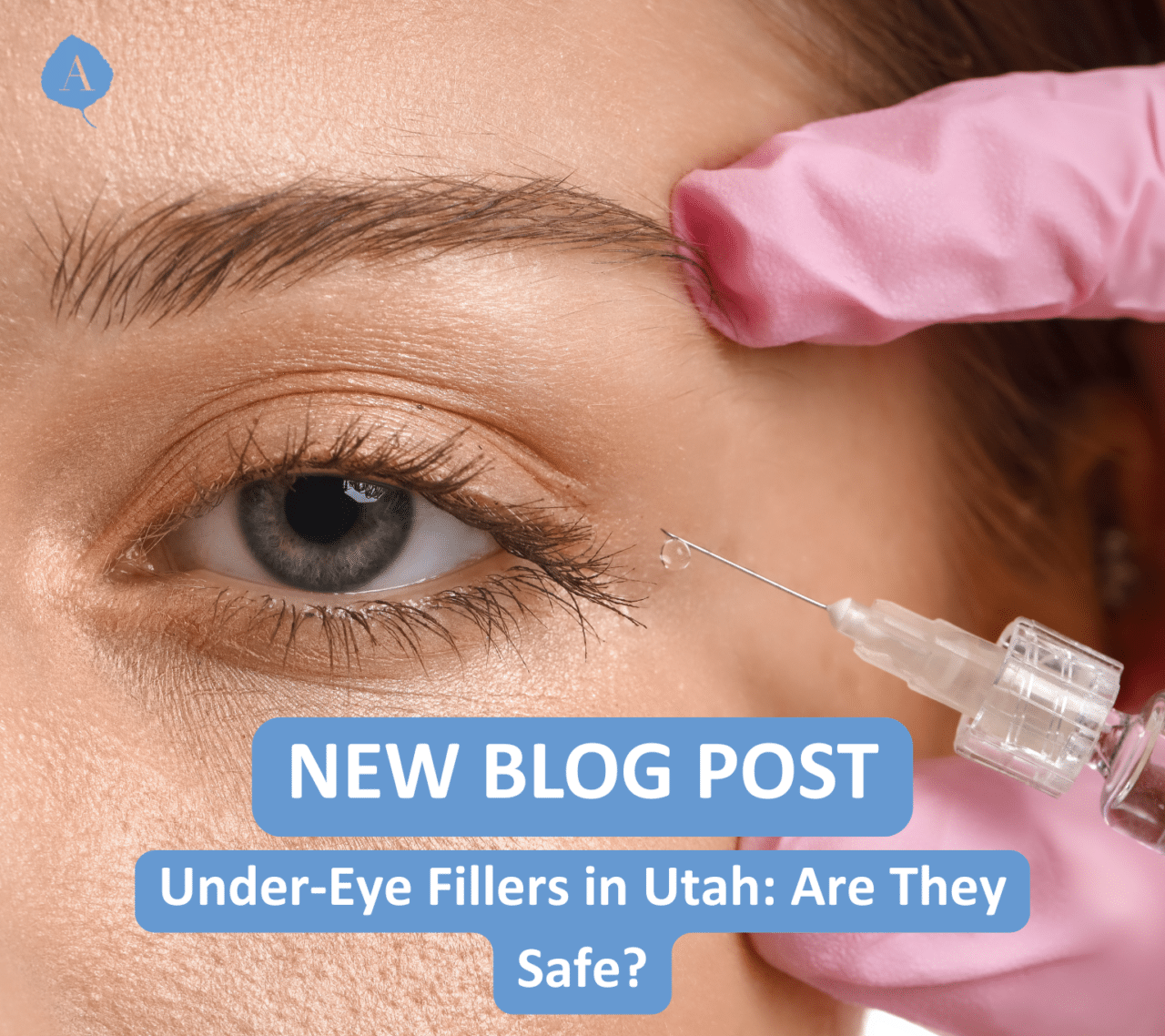
The under-eye area is one of the first places to show signs of aging, fatigue, and volume loss. Hollows, dark circles, and fine lines can make you look tired even when you’re well-rested. For many Utah patients, under-eye fillers offer a nonsurgical solution but a common question comes up: Are they safe?
The short answer is yes! When performed by an experienced, board-certified provider. But safety depends heavily on anatomy, technique, and the specific concerns being treated. Let’s walk through what you need to know.
What Are Under-Eye Fillers?
Under-eye fillers (typically hyaluronic acid-based, like Restylane or Juvederm) are injected into the tear trough — the hollow area between the lower eyelid and the cheek. The goal is to restore lost volume, smooth the transition from the lower lid to the cheek, and reduce the appearance of dark circles caused by shadowing.
The procedure is quick (about 15–30 minutes), requires minimal downtime, and results last anywhere from 9 to 18 months depending on the product and your metabolism.
Are They Safe? Key Considerations
1. Provider experience is everything. The under-eye skin is the thinnest on the face, and the area is rich with blood vessels. An injector who understands the vascular anatomy can avoid serious complications like skin necrosis or vision issues (both extremely rare with a skilled provider).
2. Not everyone is a good candidate. Under-eye fillers work best for volume loss and tear trough hollows. If your main concern is loose, crepey skin or excess fat pads (under-eye bags), fillers may not be the right answer and in some cases, they can actually make bags look worse.
3. Swelling and bruising are common but temporary. Ice, arnica, and avoiding blood thinners (aspirin, ibuprofen, fish oil) for a few days beforehand can minimize this.
When Fillers Aren’t the Right Fit
For patients with significant skin laxity or true fat herniation (those persistent under-eye bags), fillers won’t tighten the skin or remove the fat. In these cases, surgical options may be more appropriate.
That’s where eyelid tightening and blepharoplasty come in.
The Surgical Alternative: Blepharoplasty
Blepharoplasty (eyelid surgery) directly addresses the structural causes of aging around the eyes. It’s a more permanent solution for patients who want real, lasting change.
Upper Blepharoplasty
An upper blepharoplasty removes excess skin and fat from the upper eyelids. This is ideal for patients with drooping lids that obscure the natural crease or even interfere with vision. The results are dramatic — a more open, rested, youthful appearance.
If you’re browsing upper blepharoplasty before and after photos, you’ll typically see:
- A defined eyelid crease that was previously hidden by hooded skin
- Removal of “hooding” at the outer corners
- A more alert, less heavy look
Lower Blepharoplasty
A lower blepharoplasty addresses under-eye bags, puffiness, and excess skin. There are two main approaches:
- Transconjunctival (scarless): An incision inside the lower eyelid removes or repositions fat without an external scar. Best for patients with good skin tone who just have fat bulging.
- Subciliary (external): An incision just below the lash line removes or tightens skin and muscle. Better for patients with loose, wrinkled lower lid skin.
Looking at lower blepharoplasty before and after results, you’ll notice:
- Smooth, flat lower lids without puffiness
- Reduction in fine lines and crepey texture
- A refreshed look that still looks like you
Eyelid Tightening (Canthopexy / Canthoplasty)
Sometimes blepharoplasty alone isn’t enough. Eyelid tightening procedures (canthopexy or canthoplasty) reinforce the supporting structures of the lower eyelid. This is especially important for patients with:
- Lax, loose lower lids
- A “round eye” appearance after prior surgery
- Eyelids that pull away from the eye easily
Tightening the lid ensures the lower eyelid sits snugly against the eye, preventing complications like ectropion (lid turning outward) and giving a more youthful, almond-shaped contour.
The Bottom Line
Under-eye fillers are safe in Utah and when placed by an expert who understands the anatomy. But they’re not a one-size-fits-all solution. For patients with true skin excess or fat bulging, upper blepharoplasty, lower blepharoplasty, and eyelid tightening offer more predictable, permanent results.
At Aspen Facial Plastics, we take the time to evaluate your unique anatomy and goals. Whether you’re considering a nonsurgical refresh or a surgical transformation, you deserve a plan that’s safe, honest, and tailored to you.
Ready to see the difference? Browse our upper blepharoplasty before and after and lower blepharoplasty before and after galleries to see real results from Utah patients.